2024년 9월 고1 모의고사 영어 36번 해석·해설
2024년 9월 고1 전국연합학력평가(24년 9월 학평 · 고1 9모) 영어 36번 지문의 해석과 해설입니다. 36번은 글의 순서 유형이며, 주제는 ‘거울 뉴런과 관찰을 통한 학습’입니다. 영어 원문 9문장을 문장별 해석과 함께 싣고, 한 줄 요약 · 흐름 요약 · 어법(문법) 출제 포인트 · 핵심 어휘를 정리했습니다. 2024년 9월 모의고사가 내신 시험 범위에 들어간 학생과 선생님께 맞춘 자료이며, 이 지문의 변형문제와 분석지는 아래에서 받을 수 있습니다.
인간은 갓난아기 때부터 남을 관찰하고 모방하며 배우고, 타고난 행동이나 시행착오를 넘어서는 이 능력 덕분에 현대 문화가 가능하다
Learning by watching and imitating others makes human culture possible.
밑줄 어법 출제 포인트노란 바탕 핵심 문장
-
❶주제
The discovery of mirror neurons has profoundly changed the way we think of a fundamental human capacity, learning by observation.
거울 뉴런의 발견은 관찰에 의한 학습이라는 근본적인 인간의 능력에 대해 우리가 생각하는 방식을 완전히 바꾸어 놓았다.
어법The discovery of mirror neurons has profoundly changed (주어 단수) · have ×
어법the way we think of (the way + S V) · the way how ×
표현the way + S V ~하는 방식 관계부사 how 생략 (the way how ×)think of ~을 생각하다
유의어discovery = findingfundamental = essentialprofoundly = deeplycapacity = capabilityobservation = monitoringobserve = monitor
-
❷
As children we learn a lot by observing what our parents and friends do.
어린이일 때 우리는 부모와 친구들이 하는 것을 관찰하면서 많이 배운다.
어법by observing what our parents and friends do (동명사 · 관계대명사 what) · observe / that ×
-
❸
Newborns, in the first week of life, have an inborn tendency to stick out their tongue if their parents stick out theirs.
갓난아기들은 생후 첫 주에 부모가 혀를 내밀면 자신의 혀를 내미는 선천적인 성향을 가지고 있다.
어법stick out theirs (소유대명사 = their tongue) · them ×
표현theirs their tongue (소유대명사)stick out ~을 내밀다
유의어newborn = infantinborn = innatestick out = protrudestick out = poke out
-
❹
Such imitation is not perfect.
그러한 모방은 완벽하지 않다.
표현in imitation of ~을 흉내 내어
유의어perfect = flawlessimitation = mimicryimitate = mimicimitation = copying
-
❺
You may not see the tongue stick out each time you stick yours out at your newborn, but if you do it many times, the tongue will come out more often than if you do something different.
여러분이 갓난아기에게 혀를 내밀 때마다 아기의 혀가 나오는 것을 보지는 못할 수도 있지만, 여러 번 그렇게 하면 다른 행동을 할 때보다 아기의 혀가 더 자주 나올 것이다.
어법see the tongue stick out (지각동사 + O + 동사원형) · to stick ×
표현yours your tongue
유의어many times = repeatedlyeach time = whenevercome out = emerge
-
❻
Babies babble and later start to imitate the sounds their parents produce.
아기들은 옹알이를 하고 이후에는 부모가 내는 소리를 모방하기 시작한다.
어법the sounds their parents produce (목적격 관계대명사 생략 · 복수 주어) · produces ×
유의어babble = murmurproduce = generate
-
❼
Later still, they play with vacuum cleaners and hammers in imitation of their parents.
그보다 더 나중에, 아이들은 부모를 흉내 내어 진공청소기와 망치를 가지고 논다.
표현vacuum cleaner 진공청소기
유의어later still = even later
-
❽요지
Our modern cultures, in which we write, speak, read, build spaceships and go to school, can work only because we are not restricted to the behavior we are born with or learn by trial and error.
우리가 쓰고, 말하고, 읽고, 우주선을 만들고, 학교에 가는 현대 문화는 오로지 우리가 타고난 행동이나 시행착오로 배우는 행동에 국한되지 않기 때문에 작동할 수 있다.
어법cultures, in which we write ~ (전치사 + 관계대명사) · which ×
어법we are not restricted to (수동태 be restricted to) · restricting ×
표현be restricted to ~에 국한되다 목적격 관계대명사 생략be born with ~을 타고나다trial and error 시행착오
유의어modern = contemporaryrestrict = confinebehavior = conduct
-
❾
We can learn a lot by simply watching others.
우리는 그저 다른 사람들을 지켜보는 것만으로도 많이 배울 수 있다.
유의어watch = observesimply = merely
36번 변형문제 맛보기
요지 · 20제 중 4번다음 글의 요지로 가장 적절한 것은?
위 원문을 다시 떠올리며 골라 보세요.
근거❽ 현대 문화는 타고난 행동이나 시행착오에 국한되지 않기에 작동하고 ❾ 그저 남을 지켜보는 것만으로 많이 배운다.
36번 어휘 · 표현 한눈에
- the way + S V
- ~하는 방식 관계부사 how 생략 (the way how ×)
- think of
- ~을 생각하다
- theirs
- their tongue (소유대명사)
- stick out
- ~을 내밀다
- yours
- your tongue
- it
- 혀를 내미는 것
- vacuum cleaner
- 진공청소기
- in imitation of
- ~을 흉내 내어
- be restricted to
- ~에 국한되다 목적격 관계대명사 생략
- be born with
- ~을 타고나다
- trial and error
- 시행착오
유의어discovery ≈ findingfundamental ≈ essentialprofoundly ≈ deeplycapacity ≈ capabilityobservation ≈ monitoringobserve ≈ monitornewborn ≈ infantinborn ≈ innatestick out ≈ protrudeperfect ≈ flawlessimitation ≈ mimicrymany times ≈ repeatedlystick out ≈ poke outeach time ≈ whenevercome out ≈ emergebabble ≈ murmurimitate ≈ mimicproduce ≈ generatelater still ≈ even laterimitation ≈ copyingmodern ≈ contemporaryrestrict ≈ confinebehavior ≈ conductwatch ≈ observesimply ≈ merely
반의어observe ↔ overlook by + -ing의 목적어inborn ↔ acquiredperfect ↔ flawedmodern ↔ ancientrestrict ↔ liberate
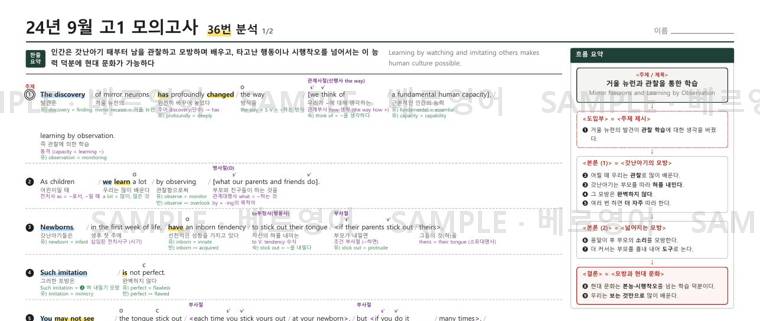 36번 분석지 미리보기
36번 분석지부터 변형문제까지
끊어 읽기와 문장 구조 표시가 들어간 분석지 전체와 단어장 · 워크북 · 변형문제(정답·해설 포함)는 PDF로 드립니다.
★ 5.0구매 후기 7개자료 퀄리티가 너무 좋네요. 자주 이용하겠습니다~~
-
36번 4종 세트분석지 · 단어장 · 어휘 테스트 · 워크북 · 변형문제 20제1,500원 구매하기
-
회차 전체 4종 세트18~45번 전 지문 · 변형문제 500제
15,900원14,900원15,900원 구매하기
2024년 9월 고1 모의고사 영어 다른 문항 해설
자주 찾는 질문
2024년 9월 고1 모의고사 영어 36번의 주제는 무엇인가요?
주제는 ‘거울 뉴런과 관찰을 통한 학습’입니다. 한 줄 요약: 인간은 갓난아기 때부터 남을 관찰하고 모방하며 배우고, 타고난 행동이나 시행착오를 넘어서는 이 능력 덕분에 현대 문화가 가능하다
36번에서 가장 중요한 문장은 어디인가요?
❶(주제) The discovery of mirror neurons has profoundly changed the way we think of a fundamental human capacity, learning by observation. ❽(요지) Our modern cultures, in which we write, speak, read, build spaceships and go to school, can work only because we are not restricted to the behavior we are born with or learn by trial and error.
36번 변형문제와 분석지는 어디서 받나요?
베르영어에서 PDF로 받을 수 있습니다: 36번 4종 세트 1,500원, 회차 전체 4종 세트 14,900원.